
Florence Nightingale, statistician
1858
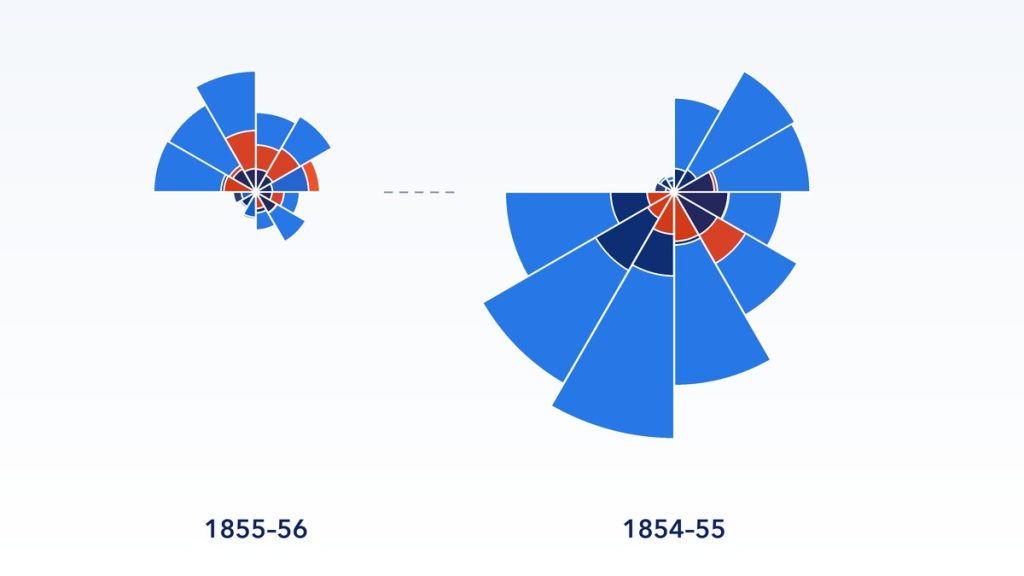
In 1858 Florence Nightingale became the first woman admitted to the Statistical Society of London, today’s Royal Statistical Society, and remained a member for more than fifty years.
During the Crimean War she had collected data on soldiers’ deaths and presented them in a polar area chart, the so-called “rose”: most deaths were caused by preventable diseases rather than by wounds. An early example of statistics used to change health and social policy.
Source: Royal Statistical Society